
Weslaco Previous Residents by Era
Finding previous residents of a Weslaco address calls for a source that fits the date. A current parcel search identifies the property and the title lead. Recorded deeds take that lead backward. Directories and census schedules add household evidence. Microfilm, maps, probate, and obituaries can close older gaps. None of those sources is a complete occupancy roster, and the public record trail should not be used to infer that every person connected to an address lived there.
| Source | Years it covers | Where held | What it can show |
|---|---|---|---|
| County Clerk official-records portal | Current records; historical start not stated | Hidalgo County Clerk portal | Grantor, grantee, instrument, date, legal description, and possible image or OCR |
| Hidalgo deed books and indexes | Deeds 1852–1888; supplement 1880–1912; Spanish-transcribed deeds 1854–1896 | TSLAC/UTRGV microfilm; County Clerk | Direct and reverse parties, volume or page, and older legal descriptions |
| Tax rolls | 1852–1910 | TSLAC/UTRGV microfilm | Historical taxpayer, parcel, valuation, and delinquency clues |
| Weslaco city directory | 1974 verified; other local years not located | TSLAC inventory and library routes | Possible occupant, spouse, address, work, and telephone clues |
| Federal census | 1850–1950 released under the 72-year rule | NARA, Census, or FamilySearch routes | Household, relationship, age, birthplace, and address or geography |
| Building permits | Current EnerGov portal; historical start not located | Weslaco Planning or Code; Public Information Act request or counter | Construction or remodel event, applicant, owner or agent, and address |
| Sanborn maps and newspapers | Weslaco map edition and local newspaper runs not verified | Library of Congress, TSLAC, library, museum, or regional collections | Building context, dated notices, relatives, and former-address leads |
Start with the record nearest to the target date, then work outward. A deed can establish a title transfer, while a directory or census may be the more useful source for a household. The distinction is central to a careful previous-residents search.
Weslaco Previous Residents Parcel Start
Use the Hidalgo County Appraisal District eSearch target or the County Tax Office account search to identify the current parcel before searching names. The public tax interface accepts owner name, property address, account number, CAD reference number, and fiduciary number. Its address mode is starts-with, and the research gives “123 Main” rather than a full directional street string as the useful form when a search fails.
Record the situs address, owner name, separate owner mailing address, account or CAD reference, and legal description. The situs is the property location. The mailing address is where notices go and can differ from it. Neither field establishes current physical occupancy. The legal description, often a subdivision and lot/block or a metes-and-bounds description, is the durable bridge when an old street form fails.
Note: A homestead exemption can be a tax clue, but it is not live confirmation that a person occupies the parcel.
Weslaco Past Residents Deed Chain
The Hidalgo County Clerk Official Records portal supports quick and advanced searches for grantor, grantee, subdivision, document type, document number, date range, and either indexed fields or full-document OCR. Use the current owner as a grantee and search the legal subdivision, lot, or document number as a second check. A recorded deed is normally indexed by parties and legal description, not necessarily by the modern street address.
- Search the parcel by its present address and capture the account number, owner, legal description, and subdivision or lot/block.
- Search the current owner as grantee in the Clerk's official-records index, narrowing a common name with a recorded-date range or legal description.
- Inspect the deed for grantor, grantee, instrument type, execution and recording dates, document number or book/page, and image-access status.
- Use the seller, or grantor, as the earlier grantee lead. Confirm the same legal description before adding that earlier deed to the chain.
- Repeat backward. If the online portal stops producing supported results, move to the direct and reverse deed indexes and books on microfilm.
- Grantor and grantee
- The grantor transfers an interest in the recorded instrument. The grantee receives that interest. In a backward deed search, a seller can become the next earlier buyer to investigate.
- Chain of title
- A documented sequence of recorded transfers for the same parcel. It is tested by dates and the same legal description, not assembled from a name alone.
- Legal description
- The lot, block, subdivision, survey, or tract wording used in land records. It often remains usable when an address, ZIP, or city label changes.
Weslaco Previous Residents Index Gap
When the portal does not reach the needed period, switch to the TSLAC Hidalgo County microfilm guide. It documents deed records from 1852, direct and reverse deed indexes, and older books. The guide identifies direct and reverse indexes for letters A through Z on reels 1017237–1017246, with reverse indexes on reels 1017242–1017245. A current portal certification date is not a historical coverage date, so do not treat it as one.
Search the direct and reverse indexes with both a party name and the property description where possible. Spanish-transcribed deed records cover 1854–1896, and older instruments may use a survey call or tract description rather than a modern address. Check plats and subdivision records if a later replat changed a lot number or added a unit.
Note: An address-only result without a matching legal description is a same-name or same-street trap, not a completed title trail.
Weslaco Previous Residents in Directories
Owners are only one part of the past-residents trail. The verified 1974 Weslaco directory can supply an occupant or household clue if the page includes one, but the research did not locate a Weslaco-specific reverse or criss-cross run. Ask Sanchez Public Library, TSLAC, the Library of Congress, or UTRGV about address-ordered material rather than assuming it exists. The historical volumes, entry conventions, and confirmed access paths are described on the Weslaco city directory page.
Copy the full entry: surname, initials, spouse wording, occupation, employer, street number, directional prefix, apartment or room, telephone, business listing, page, and the directory's notation key. Never assume a symbol means owner, renter, residence, or another status without that volume's own explanation. An omission may mean the household was outside the canvassed area, listed under another name, missed by the canvasser, or absent from a year with no volume.
Weslaco Previous Residents Census Pairing
Pair a directory year with a released federal census to distinguish a household from another family sharing the surname. Census schedules can add relationships, ages, birthplace, and neighborhood context; the city directory may add an address or work line between census decades. At the 2026 research date, 1950 is open under the normal 72-year release rule and 1960 is the next expected release. Records from later census years should not be represented as public household schedules.
- Start with the exact directory address or parcel description and record its date.
- Find the closest released census, allowing for a city or precinct label that differs from the modern mailing line.
- Compare more than one identifier, such as spouse, child, age range, street, or birthplace.
- Use a deed or tax roll to test whether the household occupied the same parcel or only the same neighborhood.
- Mark each unverified interval instead of converting a surname match into a residence claim.
Weslaco Previous Residents Map Evidence
The Library of Congress Sanborn search guidance explains how to search by state, city, and edition or release date. A returned map can show a building outline, size and shape, construction material, height or function, fire-service details, and street context. Those features can help date a structure or identify a changed block, but they do not name every household. Weslaco-specific Sanborn edition years were not verified in the research.
The Sanborn collection search controls are the appropriate route for checking whether a Weslaco edition is available.
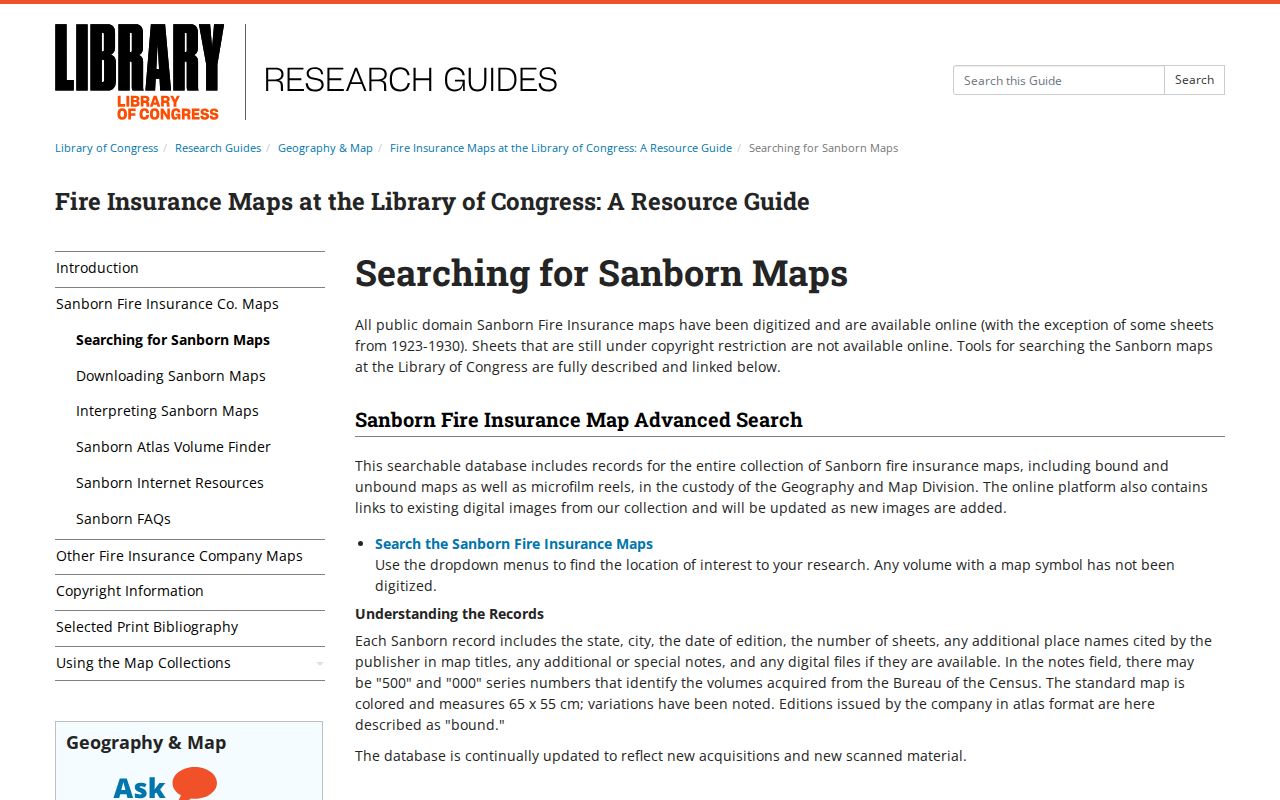
Use a returned edition with deeds, plats, permits, and the parcel's legal description. The Texas Archives' 1991-revised Weslaco water and street map is separate context, not proof of a Sanborn edition or a previous-resident record.
Weslaco Previous Residents Museum Requests
Weslaco Museum's formal research-request route is the closest verified local house-history service. Its archives include cataloged artifacts and papers, and a focused request can name an address, an owner or occupant, a date range, and the precise history question. The request page directs completed forms to 500 S. Texas Blvd., Weslaco, TX 78596, by mail or email attachment to a staff member. It does not state a fee or turnaround time.
The museum research-request page shows the formal intake route for historical Weslaco questions.
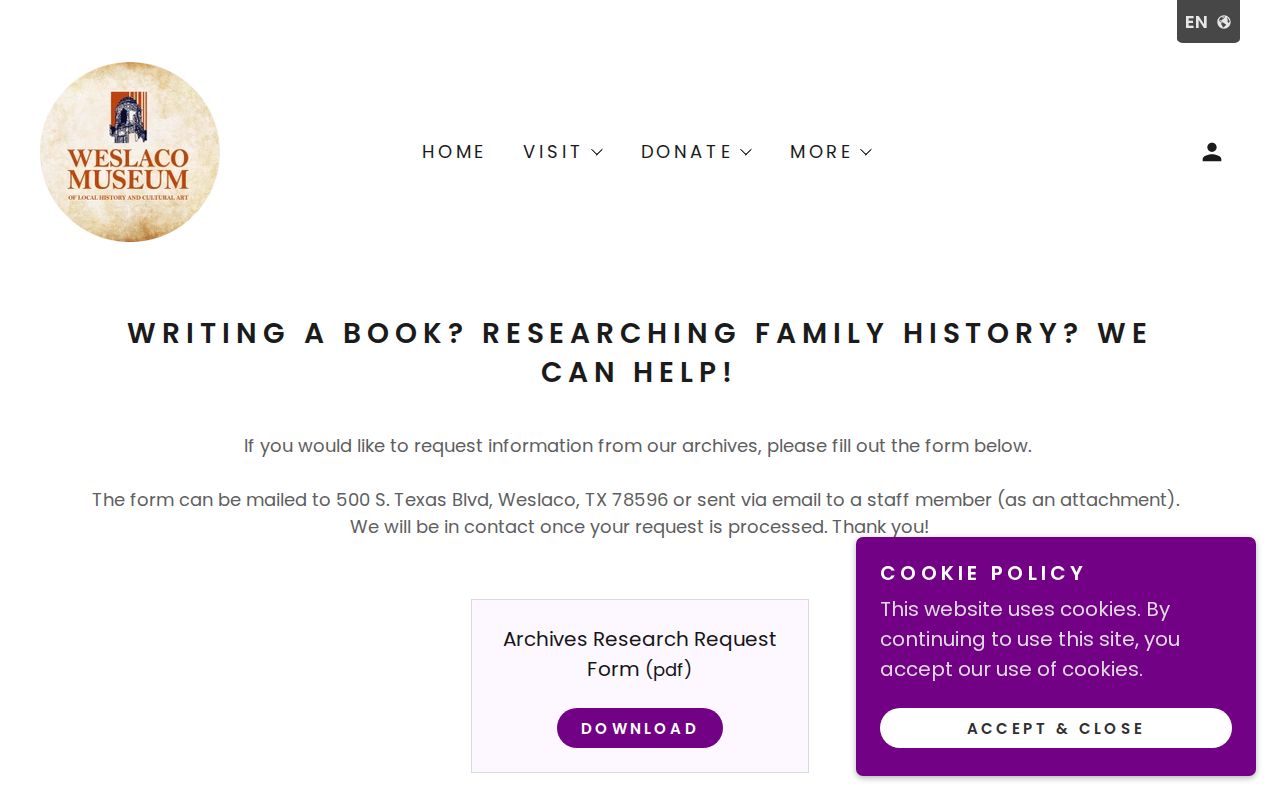
Museum material can supply community context, photographs, family papers, or institutional history. It should be paired with dated county records before concluding that a named person lived at a specific parcel.
Weslaco Previous Residents ZIP Change
USPS documented a July 1, 2013 realignment that moved 6,594 deliveries from 78596 to 78599 and expanded the older 78599 use to include delivery. That change is postal administration, not proof that a home moved or that a street was renamed. A historical directory, newspaper, or tax item can therefore carry a different ZIP even when the parcel is the same.
Weslaco street-renaming, renumbering, and annexation dates were not located in official sources. Bridge an address through the legal description, subdivision, lot/block, deeds, parcel geometry, and the 1991-revised Texas Archives map. Do not supply an invented renumbering year to make the record sequence look continuous.
Weslaco Past Residents Probate
Probate and obituaries can provide a trail endpoint. Hidalgo probate minutes cover 1852–1911 on TSLAC/UTRGV microfilm, but the minutes are not indexed. A case-paper index is identified on reel 1017254, while the case papers themselves were not filmed. Search with a known surname and date, or consult the index and clerk records rather than expecting a simple address search.
An obituary may identify relatives, a death date, a former address, a funeral, or a community tie. Local Weslaco obituary and cemetery database runs were not located in official sources. Ask the library, museum, regional newspaper collections, or the appropriate cemetery custodian, then verify a lead with deed, probate, or vital-record evidence.
Lawful use. Previous-residents research belongs to property history, family history, estate, and personal-curiosity work. Texas Penal Code §§42.07 and 42.072 address harassment and stalking; never use an address trail to harass, stalk, or harm anyone.